Coroners Court Preparation
Preparation for the Coroner's Court
For clinicians, coroners’ inquests raise complex personal, professional, and systemic issues. This page brings together resources to help you understand what to expect, how to prepare, and how to navigate the process with care and confidence. Whether you are giving evidence, supporting others, or reflecting on your role, these materials are here to guide you through the journey with clarity and compassion.

Research Article
Grief, participation, and partial resolution: an autoethnographic study of inquests after a suspected suicide
A paper based on three case-studies of coroner inquests involving suspected suicides of people who have been under the care of mental health services.
The paper tries to articulate the experience of being a participant in the inquest which often felt emotionally charged and relationally, very complex.
Key findings are:
- Grief as the most central stakeholder at the inquest
- Inquests are participatory processes where one task is for grief to be witnessed and validated by those present
- The coroner must contain the emotion in the courtroom, attend to adversarial dynamics and make it ‘safe-enough’ for witnesses to participate in a way that enables grief to be validated.

Review
Millie Tamworth's Review
The following resources are taken from Millie Tamworth’s review critiquing the publicly available guidance for mental health practitioners called to a coroner’s inquest and offering a list of her own guidance.
Videos and recorded webinars
Familiarise yourself with the process
Here you’ll find a list of videos and recorded webinars which are a good way to familiarise yourself with the whole process.
Giving evidence
Giving evidence remotely at a coroners inquest for clinical witnesses
Browne Jacobson (2023) law firm
Inquests: Top tips and advice for the medical witness
University of Plymouth et al., (2020) multiple stakeholders
Understanding investigations
Recommended reading
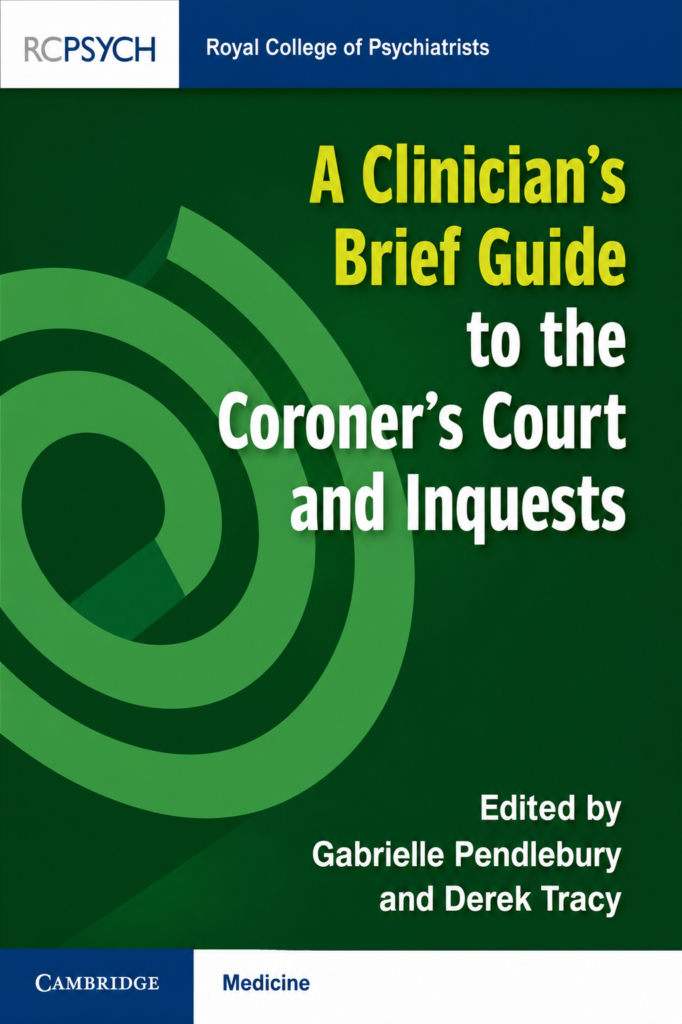
Derek Tracy's Book
A clear, accessible introduction to the coroner’s court for clinicians and mental health professionals. This guide explains what to expect, how to prepare, and how to give evidence with confidence and clarity:
Project
The Voicing Loss Website
A powerful project exploring how bereaved families experience inquests after state-related deaths. This resource gives voice to those often unheard in the process and offers vital insights for professionals seeking to understand the emotional and social impact of inquests.